 Welcome to
Prakasam
Engineering College
Welcome to
Prakasam
Engineering College
Welcome to
Prakasam
Engineering College
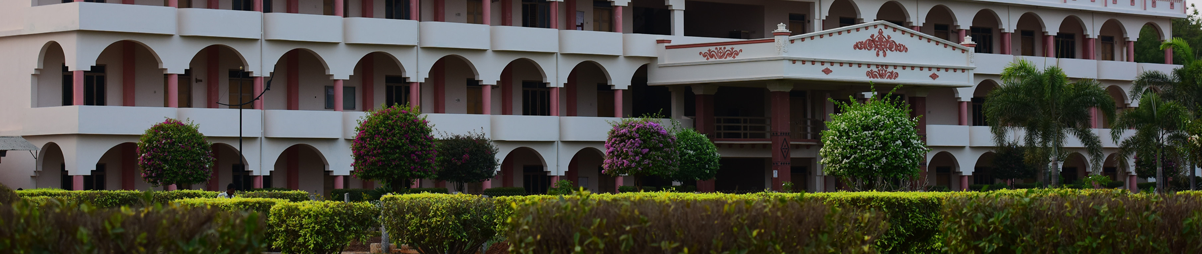
The Department of Master of Business administration was established in 2006 with a aim to develop young men and women into confident and competent professionals capable of working in organized sectors of industry and as entrepreneurs while contributing to the welfare of the society. The department offers two year post graduate programme in MBA with an annual intake of 60 seats. The curriculum for the programme is designed by JNTUK, to give graduates exposure to management skills needed for the creation of specialists who can integrate across functional areas in a dynamic organization. The Program provides a broad perspective of all areas of management.
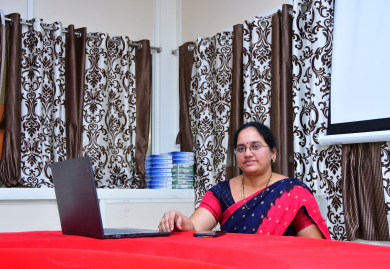
Dr. K. LAKSHMI PAVANI
Associate Professor & H.O.D
15 Years
Dr. K. LAKSHMI PAVANI, (MBA, AP-SET, UGC-NET Ph.D.) is an Associate Professor &HoD at Prakasam Engineering College in Kandukur Prakasam dist Andhrapradesh, India. In 2022, she received her Ph.D. from Acharya Nagarjuna University's Department of Commerce and Business Administration in Guntur, Andhra Pradesh. She received her UGC-NET in Management qualification in 2013. Also received AP-SET in Management from Andhra University in 2012. She has almost 15 years of experience in teaching, and research. She has around ten articles published in national and international journals. She has completed two certificate courses through NPTEL. She provided guidance and support to Numerous MBA students, facilitating the implementation of various Quality projects. Her research interests include employee welfare activities, women empowerment, Hr practices, Her goal for this book is to help students develop the information, abilities, and perspectives needed to effectively manage, lead, and contribute to diverse and dynamic workplaces in today's ever-changing corporate scene.
| S. No | Name of the Faculty | Achievements | Year |
| 1 | Dr. K.L. Pavani | Use of RPA in Supply Chain Management, Smart Transportation, and Logistics | 2023-2024 |
| 2 | Dr. K.L. Pavani | Current Learning Environments and Future Applications of Open AI and Chat GPT | 2023-2024 |
| 3 | Dr. K.L. Pavani | A Python-powered Investigation of Ambidextrous Leadership :Its Mediation Role between Firm Performance and Organizational Innovation | 2023-2024 |
| 4 | Dr. K.L. Pavani | Awarded Doctorate in status of urban unorganized women workers in Prakasam district of Andhra Pradesh in commerce and management studies from Acharya Nagarjuna University Guntur Andhra Pradesh. | 2022 |
| 5 | Mrs. K.L. Pavani | Socio Economic Background Of Women Streer Vendors In Ongole Prakasam District | 2020-2021 |
| 6 | Mrs. K.L. Pavani | Socio Economic Conditions Of Women In Un Organized Sector In Prakasam District Of Andhra Pradesh. | 2020-2021 |
| 7 | Mrs. K.L. Pavani | Banking Through New Technologies Advantages And Challenges | 2019-2020 |
| 8 | Mrs. K.L. Pavani | Qualified NET | 2013 |
| 9 | Mrs. K.L. Pavani | Qualified AP SLET/SET | 2012 |
| 10 | Dr. SK. Dastagiri Basha | A study on customers perception on life insurance products with reference to LIC of India, Hyderabad | 2023-2024 |
| 11 | Dr. SK. Dastagiri Basha | Employee Engagement in Andhra Pradesh State Road Transportation Corporation | 2023-2024 |
| 12 | Dr. SK. Dastagiri Basha | Employee Engagement in Andhra Pradesh State Road Transportation Corporation | 2021-2022 |
| 13 | Dr. SK. Dastagiri Basha | A Study on Training and Development Programs with Reference to Information Technology Industry, Hyderabad - An Anallytical Study | 2020-2021 |
| 14 | S. Balakrishna | Joined as a member in International association of Engineers | 2023 |
| ROLL NO | NAME OF THE STUDENT | PERCENTAGE | RANK |
| 22F91E0020 | K. SANDHYA SREE | 64.90 | 1 |
| 22F91E0045 | U. VENKATA SRUJANA | 64.23 | 2 |
| 22F91E0047 | Y. MALLIKA | 63.65 | 3 |
| ROLL NO | NAME OF THE STUDENT | PERCENTAGE | RANK |
| 21F91E0017 | D. SRAVANI | 64.71 | 1 |
| 21F91E0006 | G. KEERTHI | 61.83 | 2 |
| 21F91E0003 | T. BALA SUBRAMANYAM | 60.87 | 3 |
| ROLL NO | NAME OF THE STUDENT | PERCENTAGE | RANK |
| 20F91E0016 | G. AKHILA | 67.79 | 1 |
| 20F91E0012 | D. SWAPNA | 64.71 | 2 |
| 20F91E0058 | V. VENGAMMA | 64.52 | 3 |
| ROLL NO | NAME OF THE STUDENT | PERCENTAGE | RANK |
| 19F91E0021 | B. MAHESH BABU | 64.62 | 1 |
| 19F91E0010 | N. SIREESHA | 63.17 | 2 |
| 19F91E0041 | SK. HABEEMUNISA | 62.69 | 3 |
| ROLL NO | NAME OF THE STUDENT | PERCENTAGE | RANK |
| 18F91E0009 | CH. PRASANNA KUMARI | 72.46 | 1 |
| 18F91E0019 | SK. SHALIMA | 71.09 | 2 |
| 18F91E0033 | N. BHUVANESWARI | 70.90 | 3 |
| ROLL NO | NAME OF THE STUDENT | PERCENTAGE | RANK |
| 17F91E0006 | T. KRISHANA VENI | 74.25 | 1 |
| 17F91E0043 | K. SUPRIYA | 73.52 | 2 |
| 17F91E0028 | M. MOUNIKA | 72.57 | 3 |
| ROLL NO | NAME OF THE STUDENT | RANK |
| 12F91E0035 | 1.K.Rajya Lakshmi | 1st |
| 12F91E0034 | 2.Ch. Rajeswari | 2nd |
| 12F91E0017 | 3. Ch. Lakshmi Prasanna | 3rd |
| ROLL NO | NAME OF THE STUDENT | RANK |
| 13F91E0032 | 1. Sk. Raheem | 1st |
| 13F91E0056 | 2. T. Kusuma Kumari | 2nd |
| 13F91E0045 | 3. N. Sridevi | 3rd |
| ROLL NO | NAME OF THE STUDENT | RANK |
| 14F91E0003 | 1. V. Anitha Reddy | 1st |
| 14F91E0026 | 2. V. Manasa | 2nd |
| 14F91E0009 | 3. M. Divya | 3rd |
| ROLL NO | NAME OF THE STUDENT | RANK |
| 15F91E0011 | 1. M. Jasmine | 1st |
| 15F91E0013 | 2. V. Lakshmi Sneha | 2nd |
| 15F91E0030 | 3. Sk. Reshma | 3rd |
| ROLL NO | NAME OF THE STUDENT | RANK |
| 16F91E0053 | 1. T. Madhuri | 1st |
| 16F91E0052 | 2. I. Adi Narayana | 2nd |
| 16F91E0054 | 3. D. Priyanka | 3rd |
| S. No | Name of the Faculty | Designation |
| 1 | Dr. K. LAKSHMI PAVANI | ASSOCIATE PROFESSOR & HOD |
| 2 | Dr. SK. DASTAGEER BASHA | ASSOCIATE PROFESSOR |
| 3 | Mr. S. BALAKRISHNA | ASST PROFESSOR |
| 4 | Mr. V. BALAKRISHNA | ASST PROFESSOR |
| 5 | Mr. N. VENKATA RAO | ASST PROFESSOR |
| 6 | Mr. P. RAMBABU | ASST PROFESSOR |
| 7 | Mr. P. KESAVA | ASST PROFESSOR |
Kandukur, SPSR Nellore District,
Andhra Pradesh
Phone : +91-8598-222288,
Email : [email protected]
Registered under Amma Education Society
Follow Us On


Ongole to Kandukur – 50 Kms: Non Stop Buses every 30 Mins. Singrayakonda(Railway Station) to Kandukur – 13 Kms: Local Buses are available Kandukur to College – 3 Kms: 5 Mins travel time either by Bus or Auto
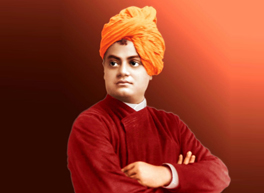
Education is the manifestation the perfection already in man.
Swami Vivekananda